(970) 927-9668
The career of Rick Stevens has evolved in much the same way his paintings do. Stevens takes his inspiration from the natural world, approaching his paintings with spontaneity and transmitting the feelings evoked by the landscape with immediacy and improvisation, an approach he compares to the jazz music often playing in his studio. Stevens spends quite a lot of time in nature where he has found his spirituality, his connection to the natural world and astonishing beauty that he translates into his raw and unconventional style. Here, he shares his his history with plein air painting, his resistance to categorization, and the surprises one may find in the woods.
There’s a kind of musicality in nature that I want to tune into through my landscapes. Painting becomes a way of listening and suggests that there’s a sentience that moves throughout the natural world.
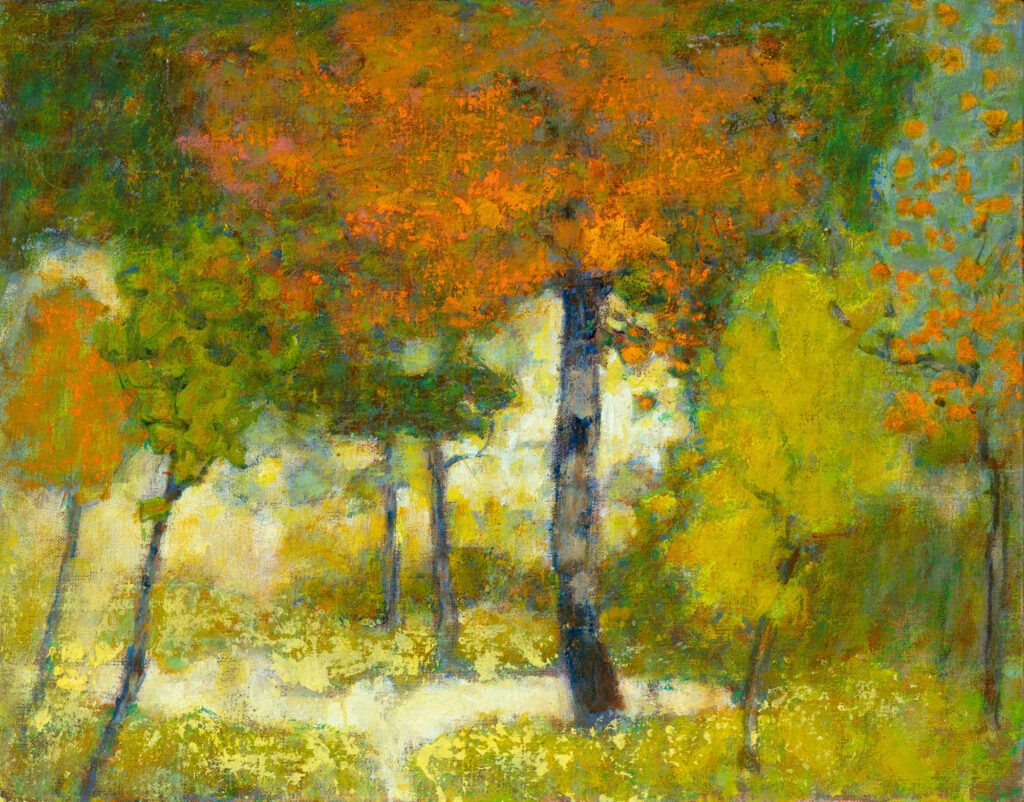
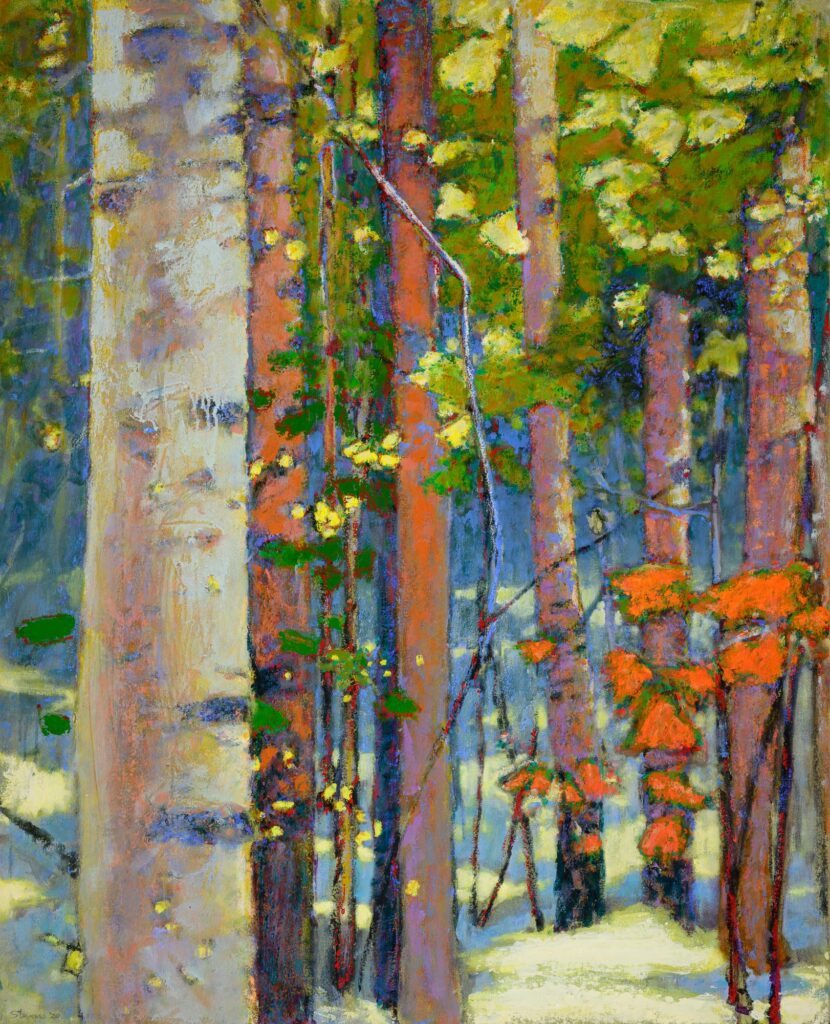
I like to vary the surfaces on my paintings, such as placing thin, drippy washes next to thick impastos. I blend a range of mediums and applications that help me express effects in nature and contribute to the sensual, emotional quality of the work.
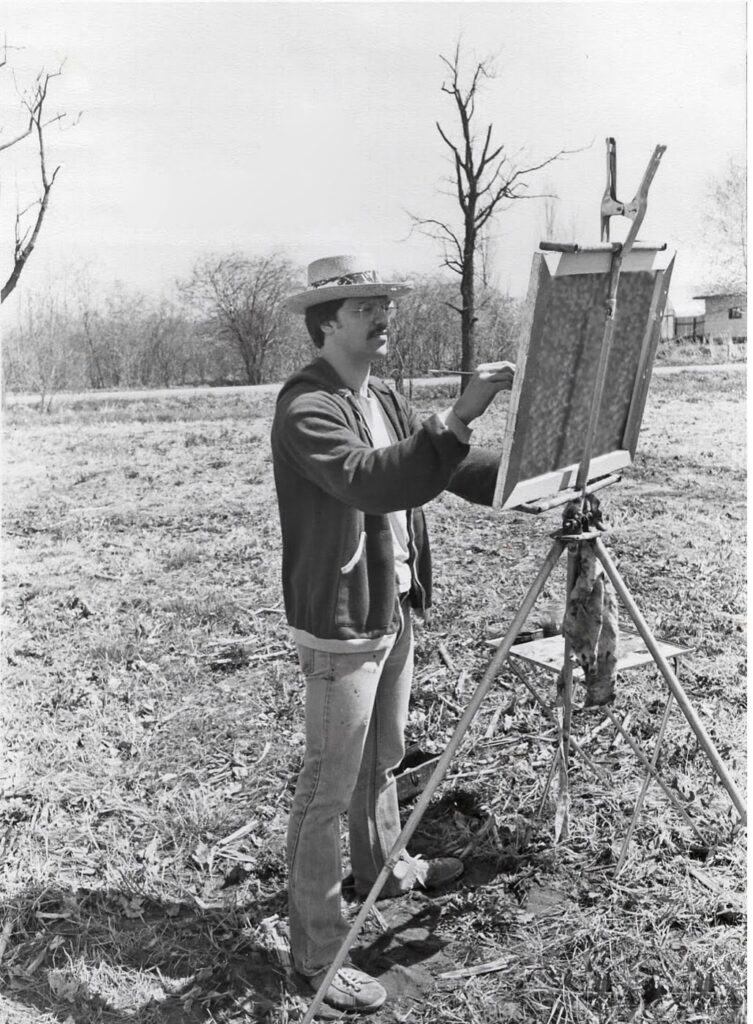
Painting outdoors is a great practice. I highly recommend it to developing artists. Still, I’ve never fully embraced the label “plein air painter” for myself. Even during periods when I did a lot of outdoor painting the term never quite fit. Labels tend to be limiting, especially when you have a tendency to follow impulses over conventional rules. My own work resists neat categorization.
By the time I complete one of my plein air paintings, I have spent far more time working on it in the studio than whatever time I spent painting outdoors. Whether it still counts as plein air painting is open for debate, but I’ve never been a purist about such things.
Plein air painting often includes an element of adventure. Besides my setup for oils, I like to bring a sketchbook and am always gathering reference material by taking photos, whether with a professional camera or the camera on my phone. I often find myself bushwacking through off-trail terrain: along rocky streams, through dense undergrowth or up steep inclines that can push my physical limits. At times it feels like a sport, although a solitary and non-competitive one.
As an artist-in residence at several national parks, I’ve been privileged to paint some truly spectacular locations. I’m also drawn to less dramatic, intimate spots that I can revisit in different lights and seasons. Just ‘looking’ is an underrated practice in cultivating a vision for your artistic direction. The Japanese term Shinrin yoku, or “forest bathing” captures this well: the idea of absorbing the landscape through the senses, allowing the mind to quiet.
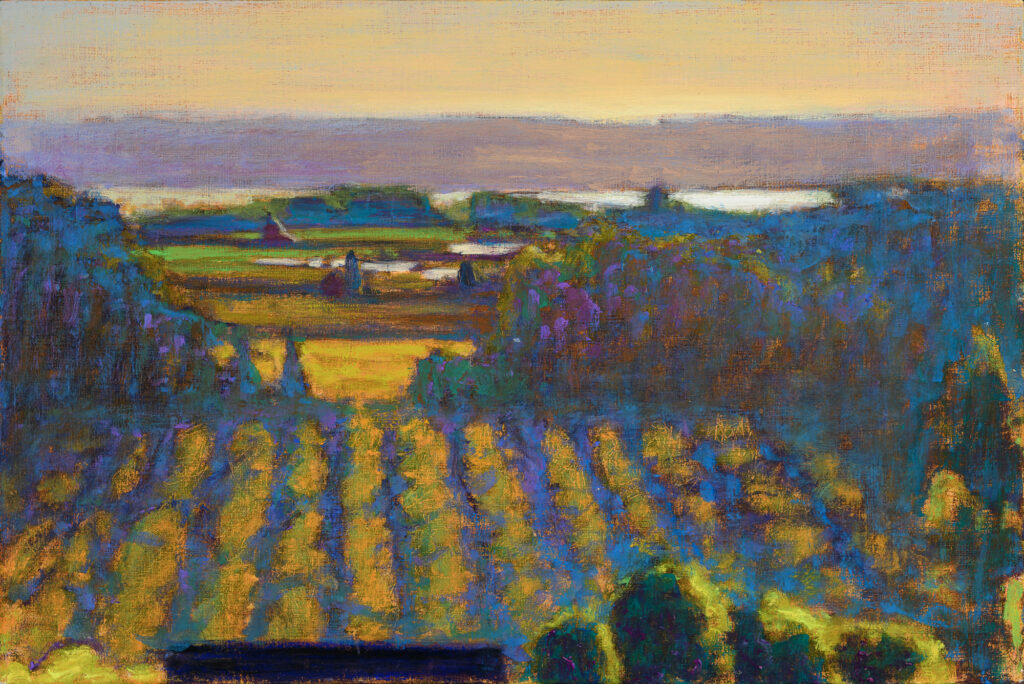
Much of my more abstracted imagery begins with stylizing forms found in nature. I’m often drawn to atmospheric effects and spatial ambiguities that push a scene oward an imagined, almost otherworldly realm — what some might call abstraction. At other times, I begin with no subject in mind at all, working in the spirit of non-objective painting. Yet even then, forms reminiscent of the landscape inevitably begin to surface. I’ve learned not to resist this, but to follow where it leads—to play with it.
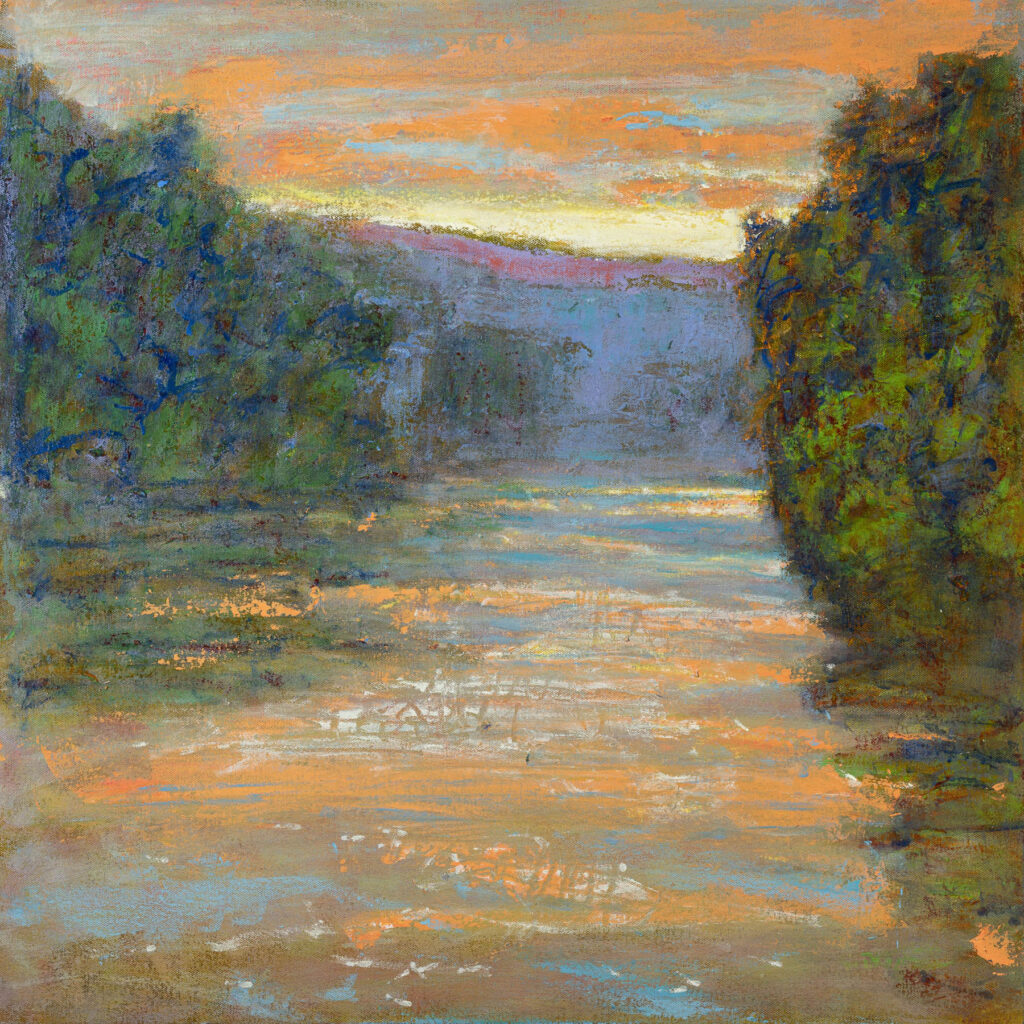
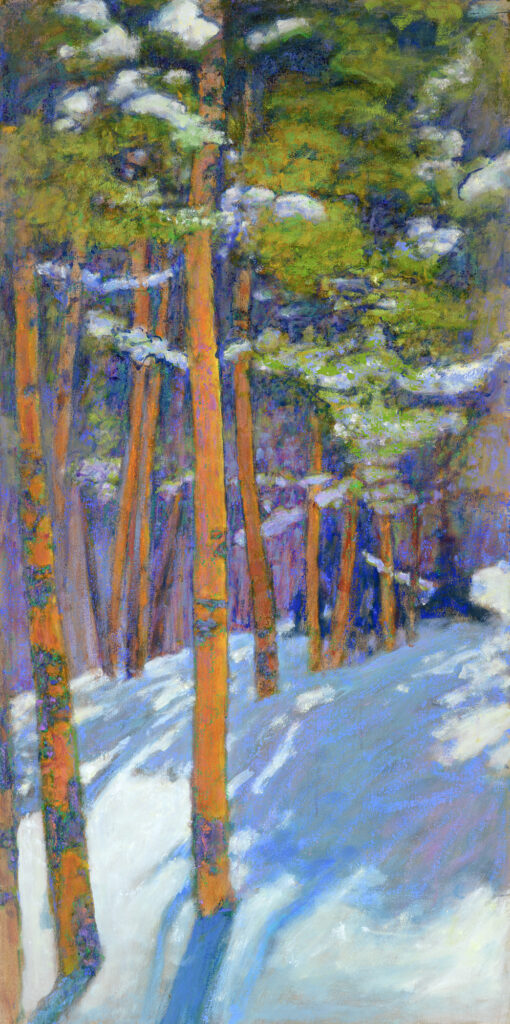
I love capturing the mystical, atmospheric presence of fog and mist. Mist on the Crystal River emerged after I spent a few days along the Crystal River in Redstone, CO. The morning sun filtering through the rising mist was magical and fleeting. Dusk in the Forest II explores the transition of day into night. In which everything is cast in a warm glow, contrast in compressed and a quieted tone gives a feeling of suspension.
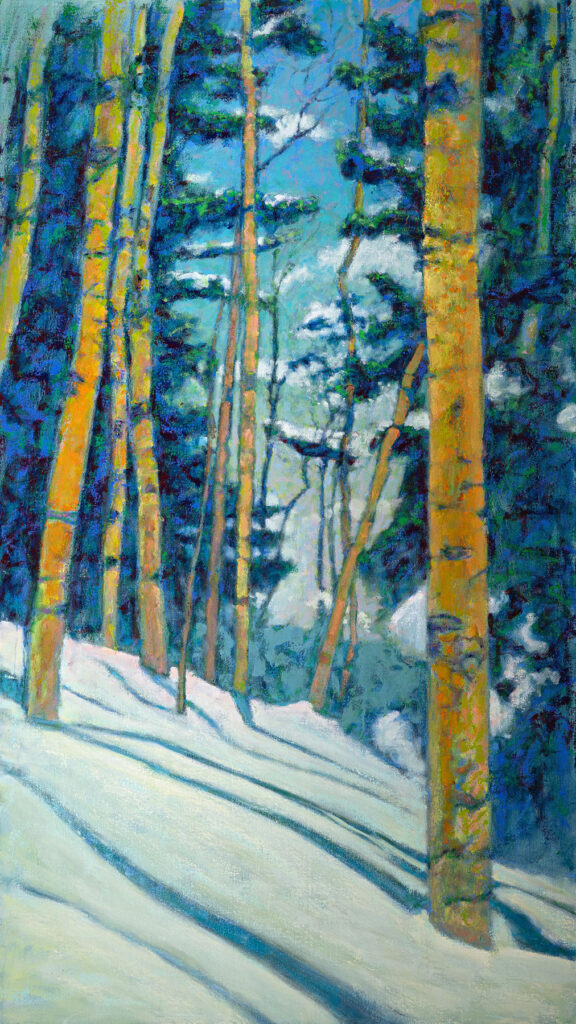
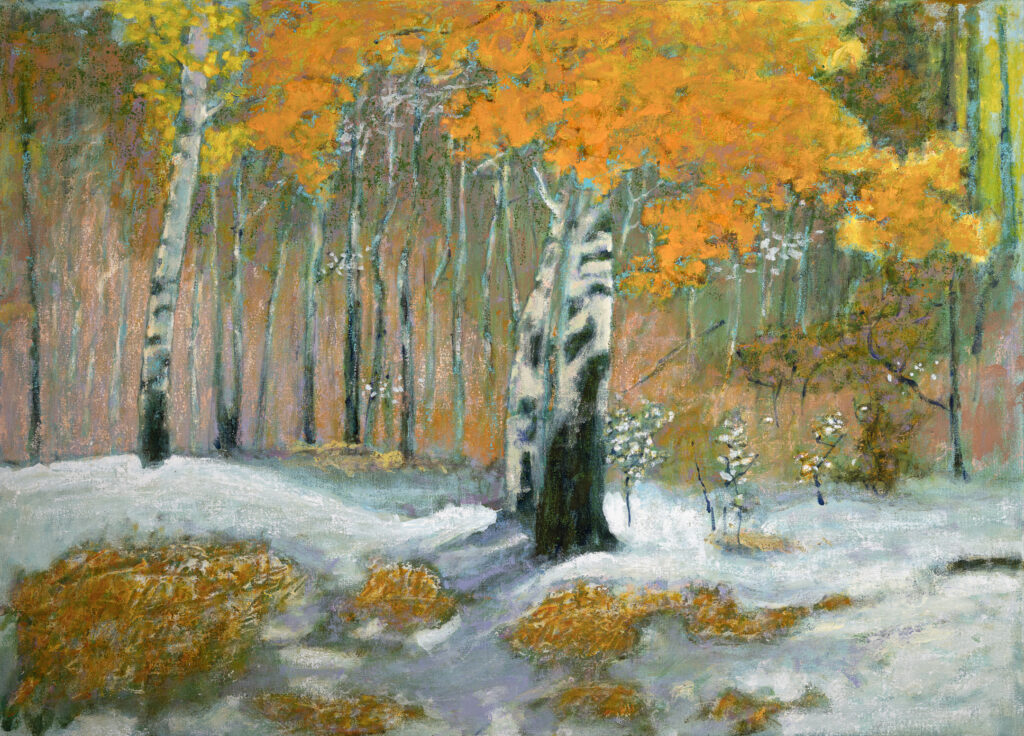
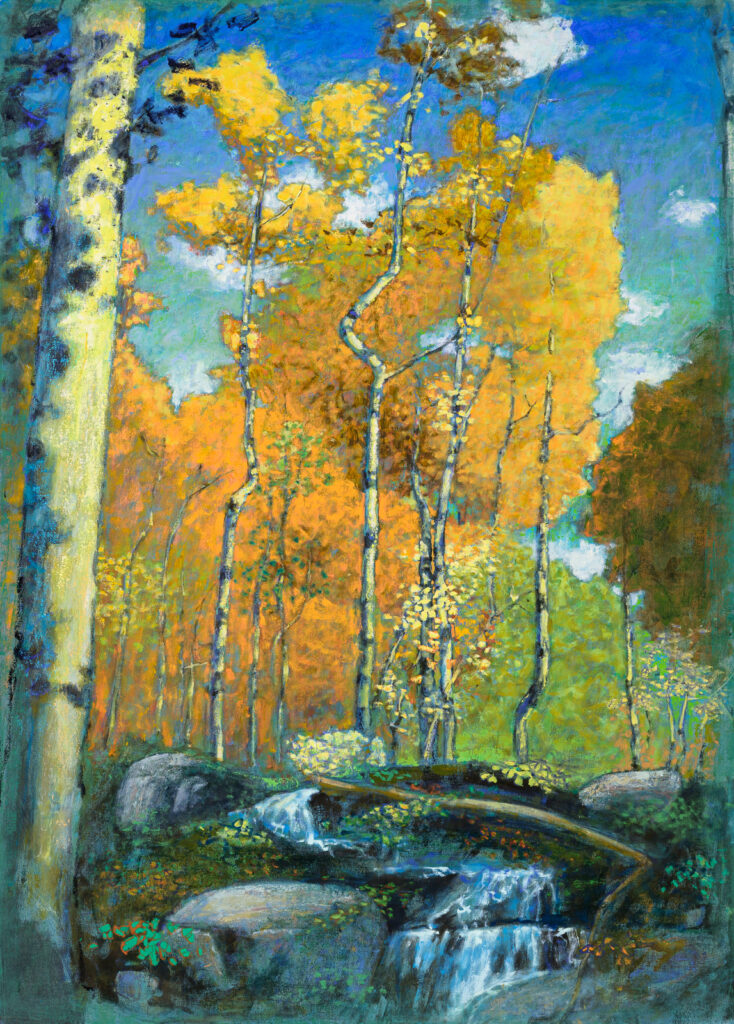
Some of the landscapes emerge from a blend of an actual spot, memory, and imagination, reassembled to evoke a more dreamlike vision. In First Snow in the Aspens (above) I imagined a scenario of overlapping seasons —how a white blanket of snow might play off the bright autumn foliage. Autumn Cascades (below), rooted in a real location, I recreated from memory a mountain stream with boulders and cascades to add to the drama of the exuberance of the fall foliage.
There’s a paradox in the way we seek out wilderness for inner experience. We think of venturing outward, into remote landscapes, yet often what we find is a deepened awareness within. Perhaps it’s not two journeys at all, but one. Is there even a separation between the inner and outer landscape? John Muir captured this beautifully when he wrote, “I only went out for a walk, and finally concluded to stay out till sundown, for going out, I found, was really going in.”
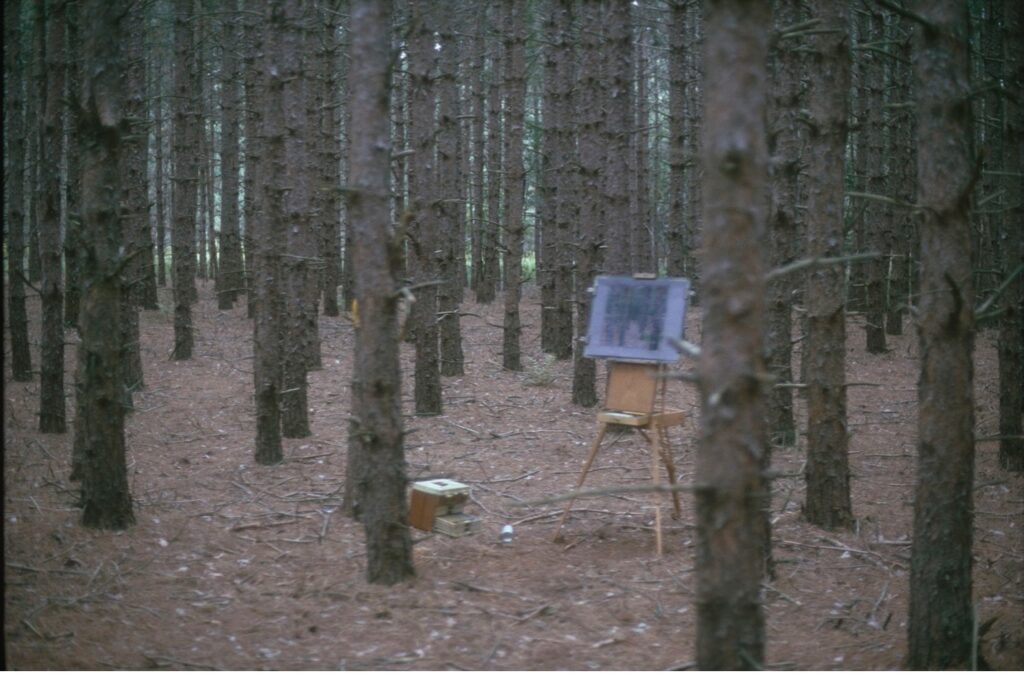
After working with the same subject matter over time, and developing enough fluency with the materials, something begins to shift. You start creating your own rules, not by abandoning structure but by internalizing it—embodying principles, then improvising around them. One of my art heroes, George Inness, was a good example of this in his late career. A painter colleague of his recalled, “His forms were at the tips of his fingers, just as the alphabet was at the end of the tongue.” There’s something deeply natural in that—a language of form, honed through repetition, that allows for spontaneous expression.
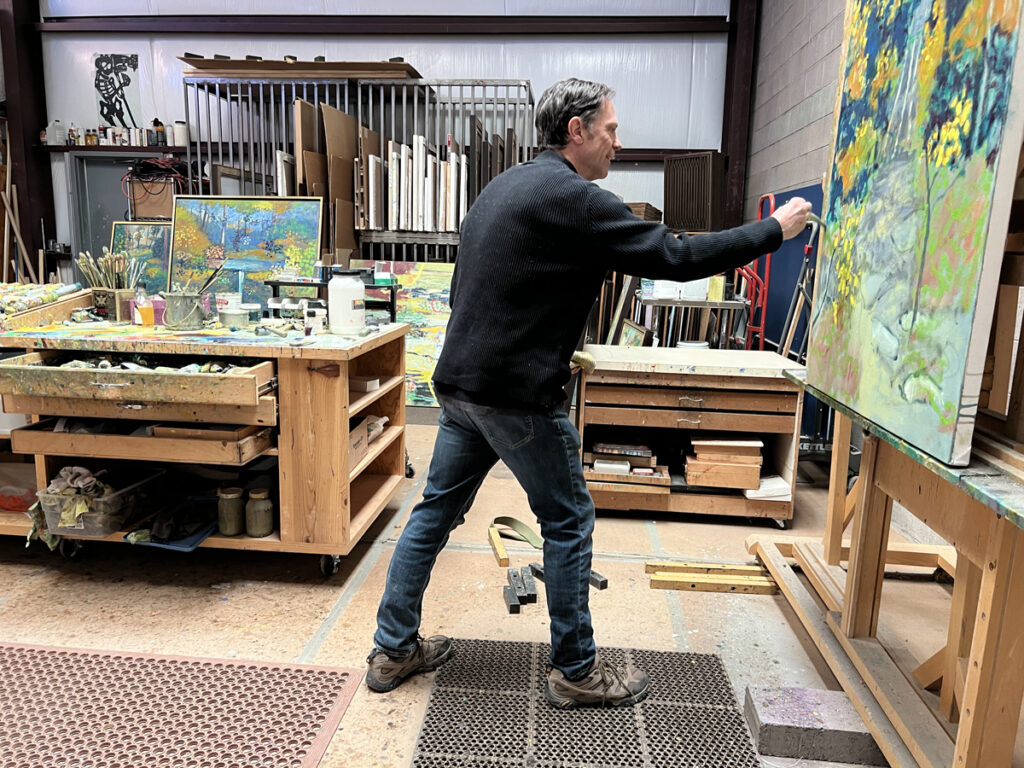
My studio is forever filled with paintings in process. What may seem chaotic, I find to be an organic flow. To work the oils in layers, the drying time alone is a good reason for setting aside one painting to work on another. Meanwhile, the time away from the work proves valuable when I see it with fresh eyes after some time away from it. Detachment is a requirement to see things for what they are, as the artistic vision is always compromised by the ability to execute it. The process encompasses everyday lessons in how to respond to what is there, as well as what’s in the imagination.