(970) 927-9668

Marcia Weese’s luminous monoprints blur the boundaries between painting, drawing and sculpture, combining layered color, atmosphere and organic form through an intuitive printmaking process. Now available at Ann Korologos Gallery are works from her ABOVE | BELOW and FLOWERS series, both rooted in Weese’s ongoing exploration of nature, transformation and the interconnected intelligence of the natural world.
Originally trained as a sculptor, Marcia Weese approaches printmaking with an unusually physical and tactile sensibility. Rather than constructing images through rigid or linear methods, she builds layered fields of printing ink before selectively wiping away pigment to reveal light, movement and form from within the surface.
The resulting monoprints occupy a space between painting, drawing and sculpture.
Her compositions feel simultaneously atmospheric and architectural, balancing transparency, gesture and texture with carefully structured forms. Through layering and subtraction, Weese creates luminous surfaces that seem to emerge from beneath the paper itself.
This sculptural approach has become a defining element of Weese’s contemporary monotype practice.
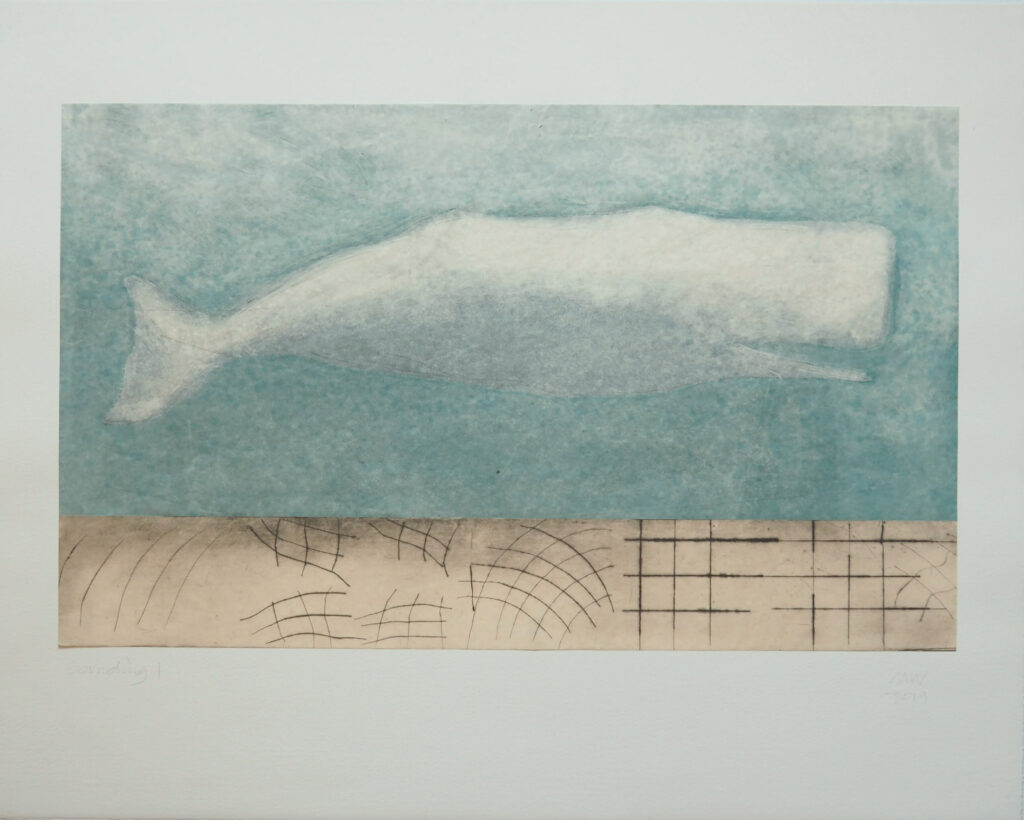
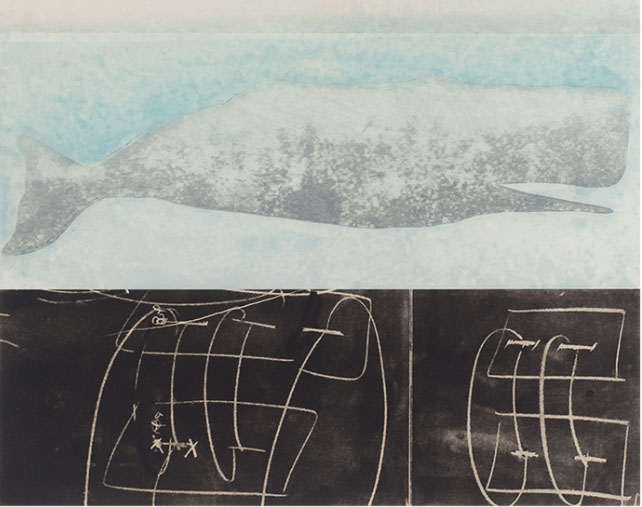
The ABOVE | BELOW series reflects on the visible and invisible systems that connect the natural world. Inspired by whale migration, ocean ecosystems and communication within nature, the series reflects on the relationship between visible and invisible worlds. Ethereal whale forms drift through layered fields of color and light, appearing both immense and elusive.
“Deep throated whale songs hold the mystery and resound over hundreds of ocean miles, and the complex network of trees in a forest communicate through their root systems,” Weese explains. “Both point to the phenomenal intelligence of the natural world. The cooperation, collaboration, and communication of the world above and the world below demonstrate an interconnectedness that binds us all.”
Weese’s ABOVE | BELOW series expands these ideas into the mysteries of the ocean and the unseen systems that connect the natural world.
“BELOW, amidst her myriad mysteries, resides the intelligence of the natural world,” Weese writes. “ABOVE the surface is the manifestation of this intelligence, or what we think we see.”
“These prints ruminate on the adjacency of these two worlds and beg some questions. Are we conduits or interlopers? How can we synthesize these realms to come into better balance as humans?”
Also included are Weese’s thistle monoprints, inspired by childhood summers spent on the prairie northwest of Chicago.
“I grew up spending summers on the prairie northwest of Chicago among thistles and bumblebees,” she says.
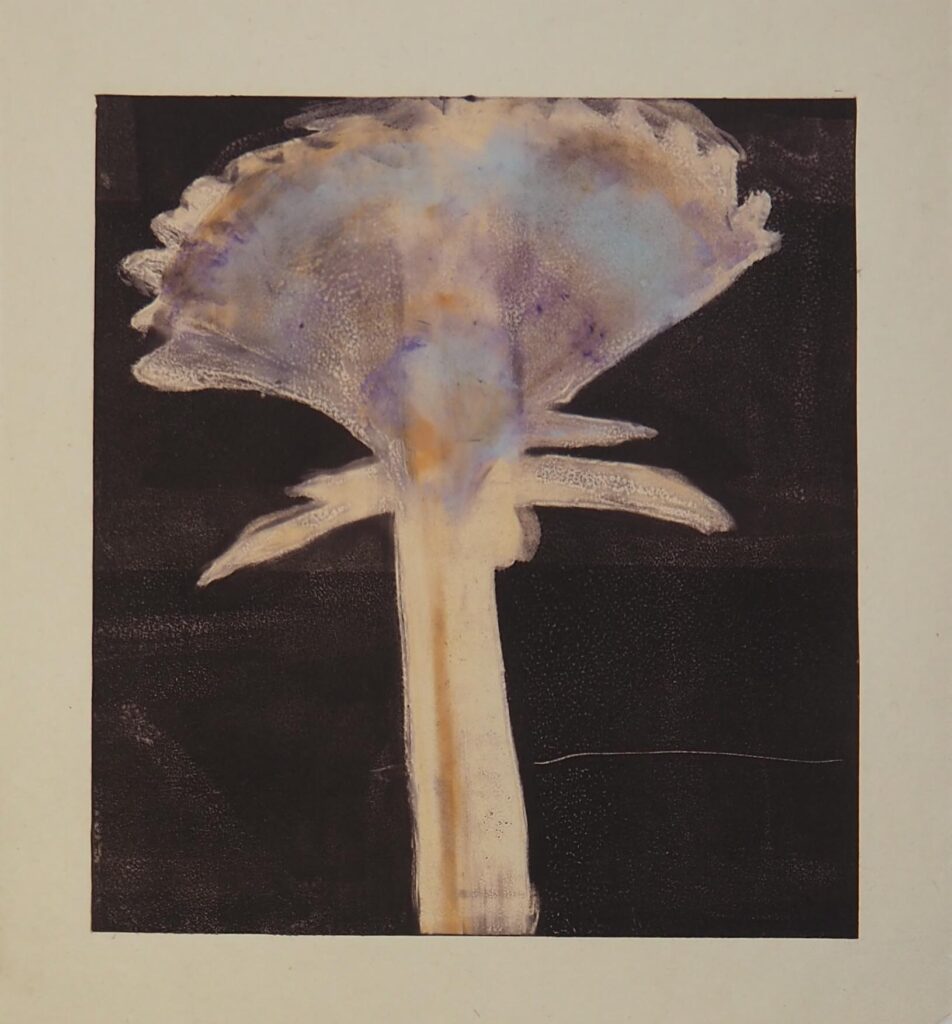
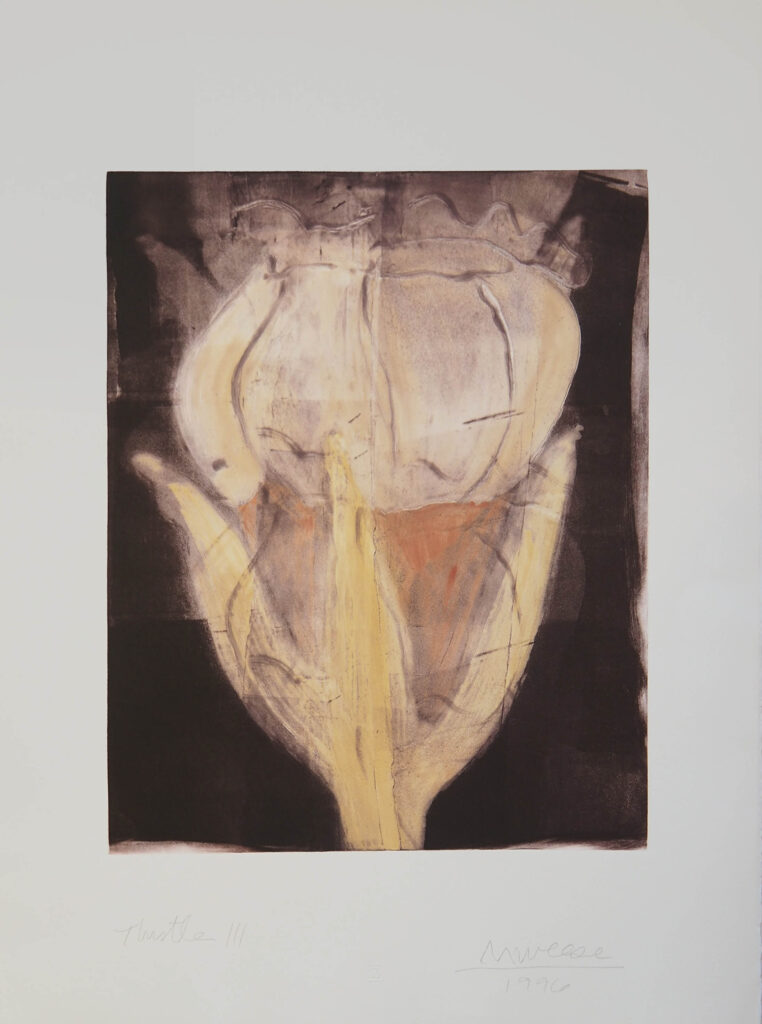
The works were influenced in part by the botanical photography of German artist Karl Blossfeldt. Known for his dramatic black-and-white close-ups of plants, Blossfeldt revealed the hidden architecture within organic forms — an approach that resonates strongly within Weese’s own work.
“In black and white close-ups, he captured the astonishing architectural structure of plants,” Weese notes. “I am drawn to sculptural forms and the dichotomies that exist between organic and geometric shapes.”
Unlike traditional editions, monotypes produce singular, one-of-a-kind impressions. Layers are built, removed and rediscovered through improvisation and response. Light emerges through subtraction as much as addition.
For Weese, the process mirrors the ideas embedded within the work — transformation, impermanence and discovery.
Her prints reward sustained viewing. Forms gradually surface through transparency and gesture, creating compositions that feel both intimate and expansive.
Across whales, flowers, thistles and atmospheric abstractions, Weese’s monoprints invite viewers to slow down and observe the subtle systems of communication, balance and change that exist throughout the natural world.

