(970) 927-9668
When Clay Wagstaff delivered his first paintings to Ann Korologos Gallery, he described a process that begins well before the final layer of paint. His landscapes draw on places encountered across the country, then bring those elements together through drawing, composition and translucent layers of oil color. We spoke with Clay about the printmaking background behind his technique, the light in his paintings and the animals that give some of them a life of their own.
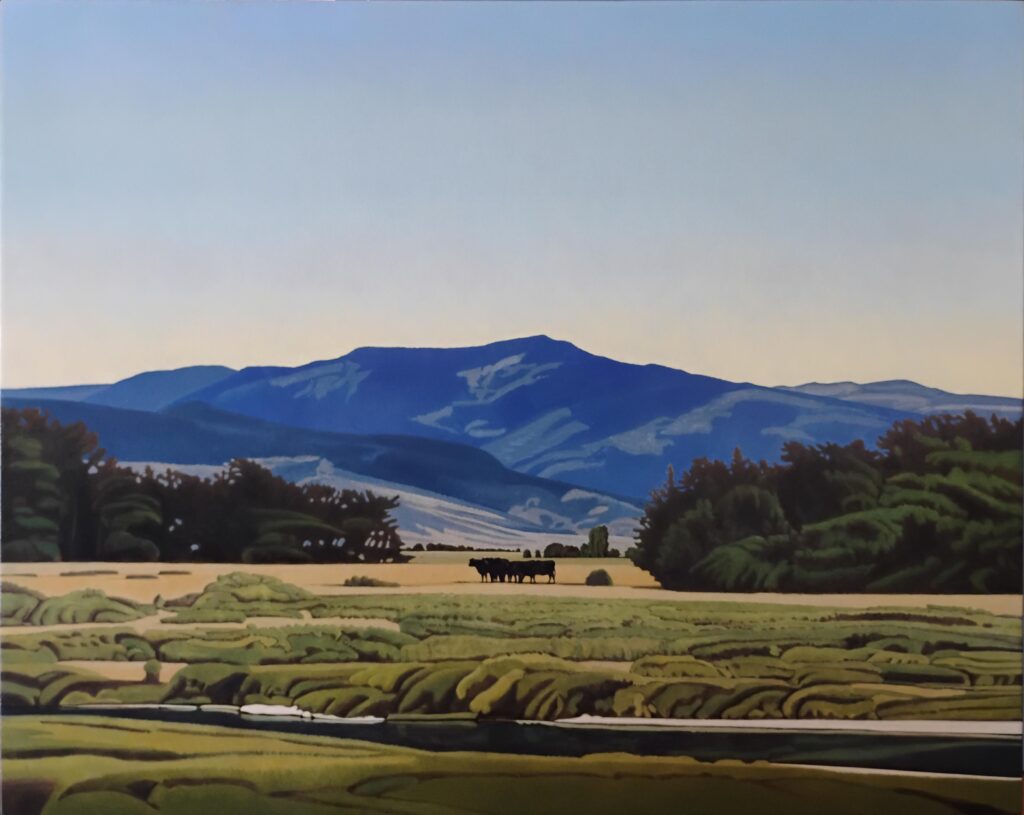
I start out with an underlying glaze. For instance, in Mountain no. 35, I have a blue glaze underneath everything. I put the gesso on the raw panel, then a glaze on top of that. Then I go back in and burn out parts of that glaze. Anything that’s white in here goes right down to the gesso. It’s not painted white. If you look at the sheep or the clouds, you can see the glaze in the little grooves of the wood panel.
After that, I do a fairly detailed drawing using the Fibonacci series and dynamic symmetry. Then I put in what I call an underpainting, with more of the different colors. It’s a matter of push and pull. After the underpainting is done, I put glazes on top. The sky can have five or six different glazes. They’re almost like sheets of glass: individual layers of color that aren’t physically mixed. They’re mixed visually.
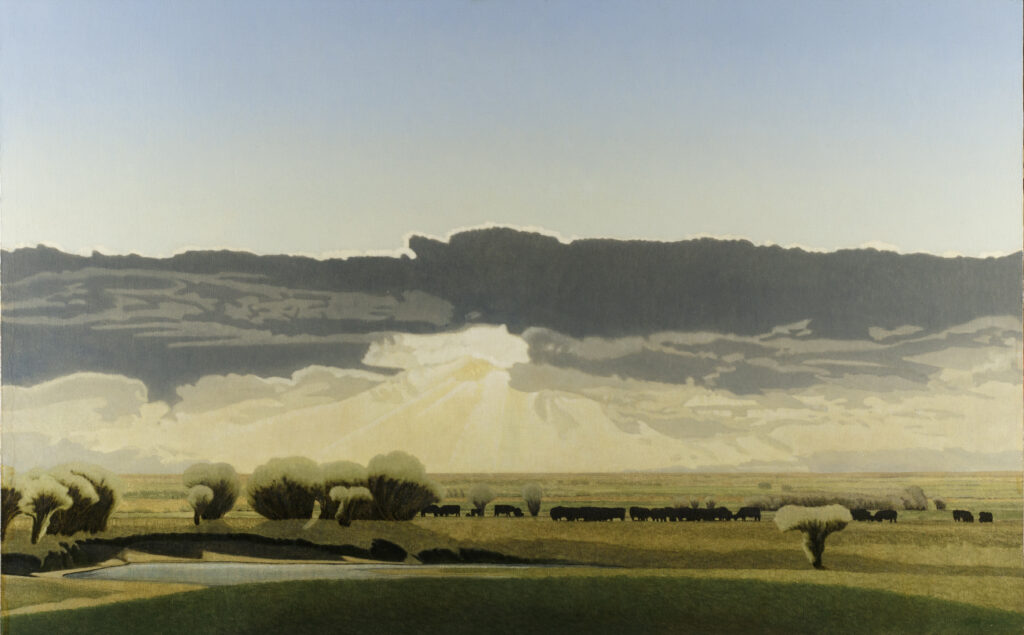
I started as a printmaker. I have a BFA and an MA in printmaking, and an MFA in drawing and painting. In my paintings, I’m thinking like a printmaker would. For each color in printmaking, you would have a different plate. In the painting, you keep building up those layers. It’s something I’ve developed over the last 40 years, thinking that way and coming up with different innovations over time.
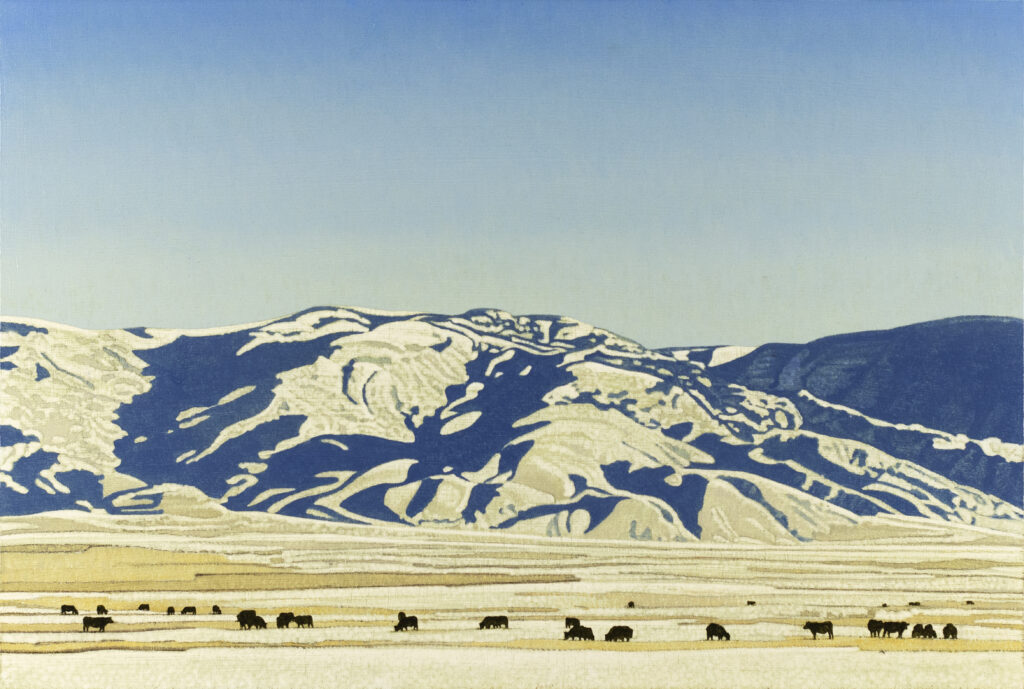
The mountains are from one place, the trees are from another place, the river is from another place. These scenes are constructed from different places. We’ve traveled a lot; we’ve visited all 48 lower states. It looks enough like somewhere somebody could be from, or someplace they visited, that there’s a resonance there. But it’s not a specific place.
With the Fibonacci series and dynamic symmetry, I can control what’s going on with the piece compositionally. I can make it feel calmer, or I can put more tension in it based upon those points. [The elements] get stretched and compressed because of the mathematics involved. But I don’t want to inform it too much, because I don’t want to steer somebody away from their own experience as well.
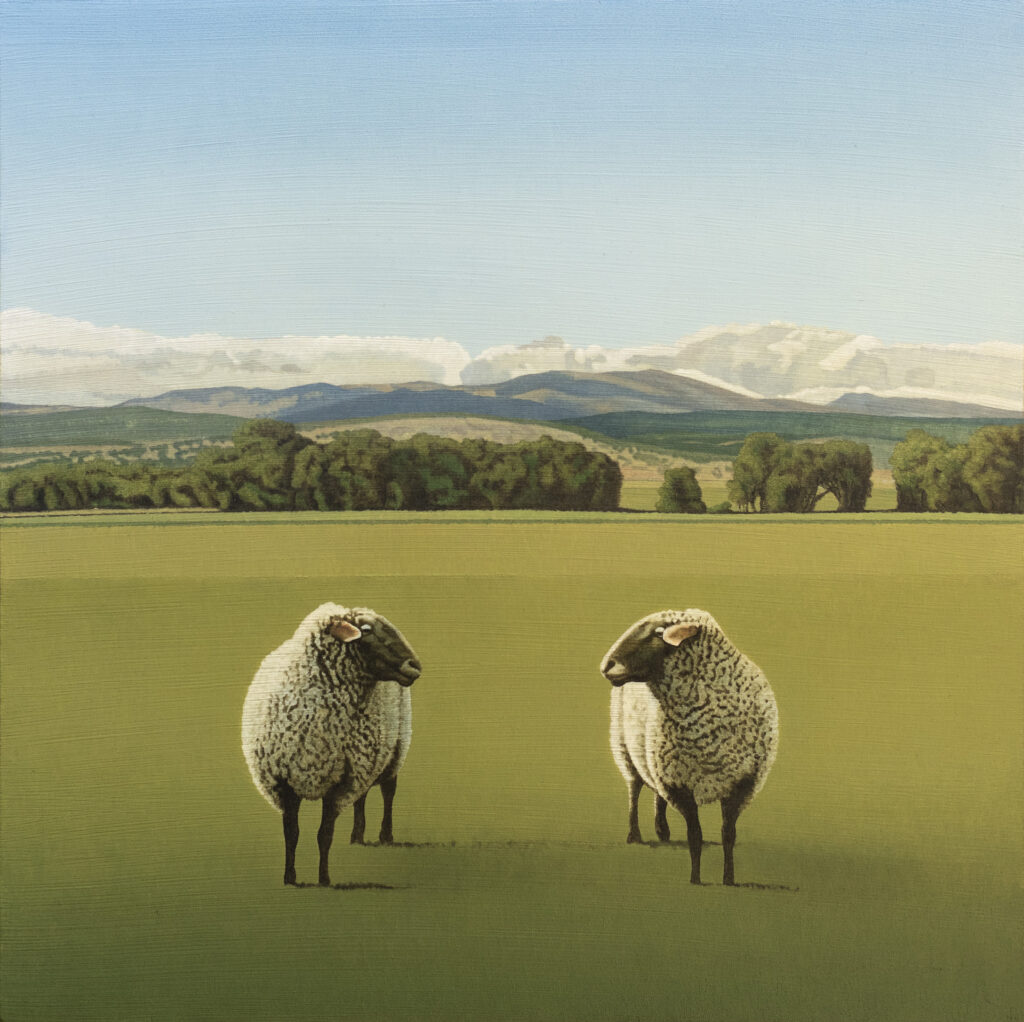
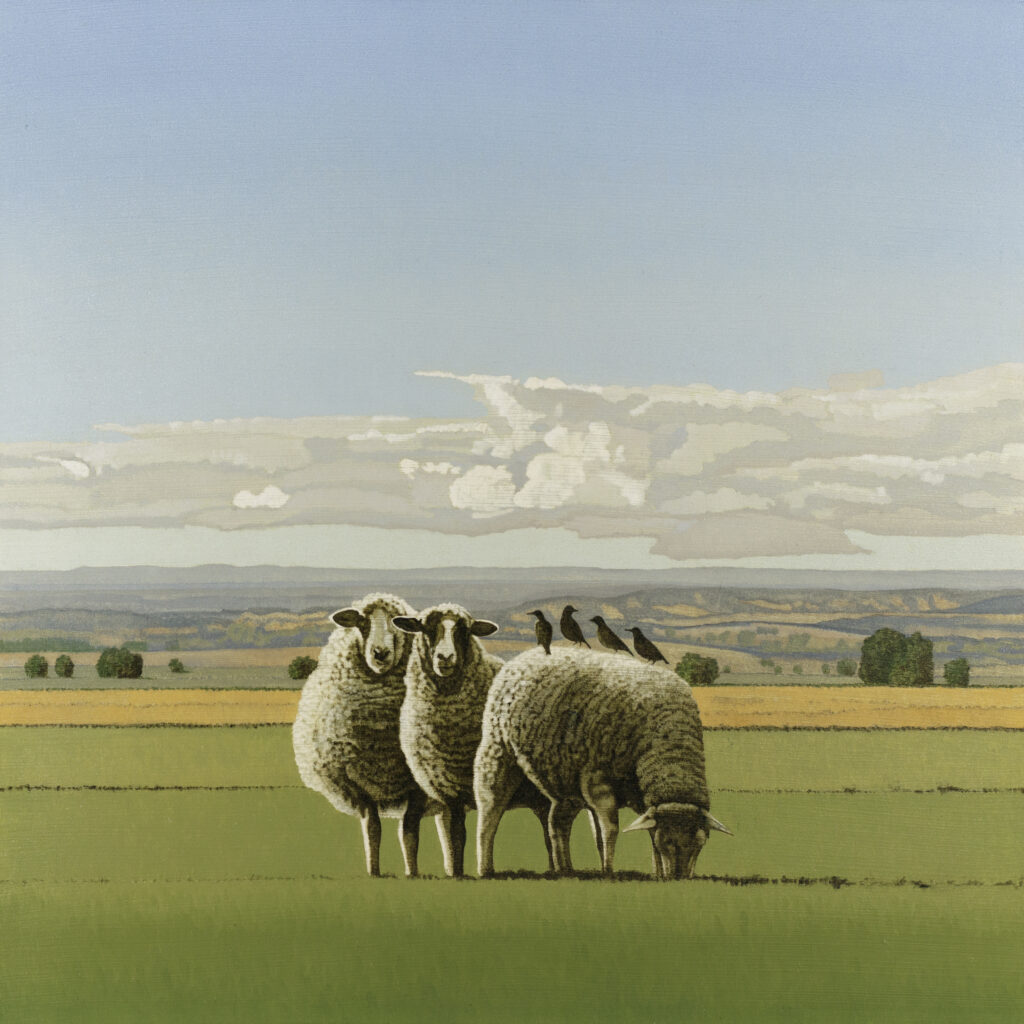
When we lived in Tropic, the neighbor had some black-faced sheep, and they really had a personality to them. The place we live now, the Sanpete Valley, was a sheep-raising place. At any given time, there are thousands of sheep in the valley. You can play with the conversations going on between the sheep and introduce some humor. My technique fits right in with what a sheep is: the modeling of the form, burning out the glaze, putting more glazes on top. It resonates well with my technique.
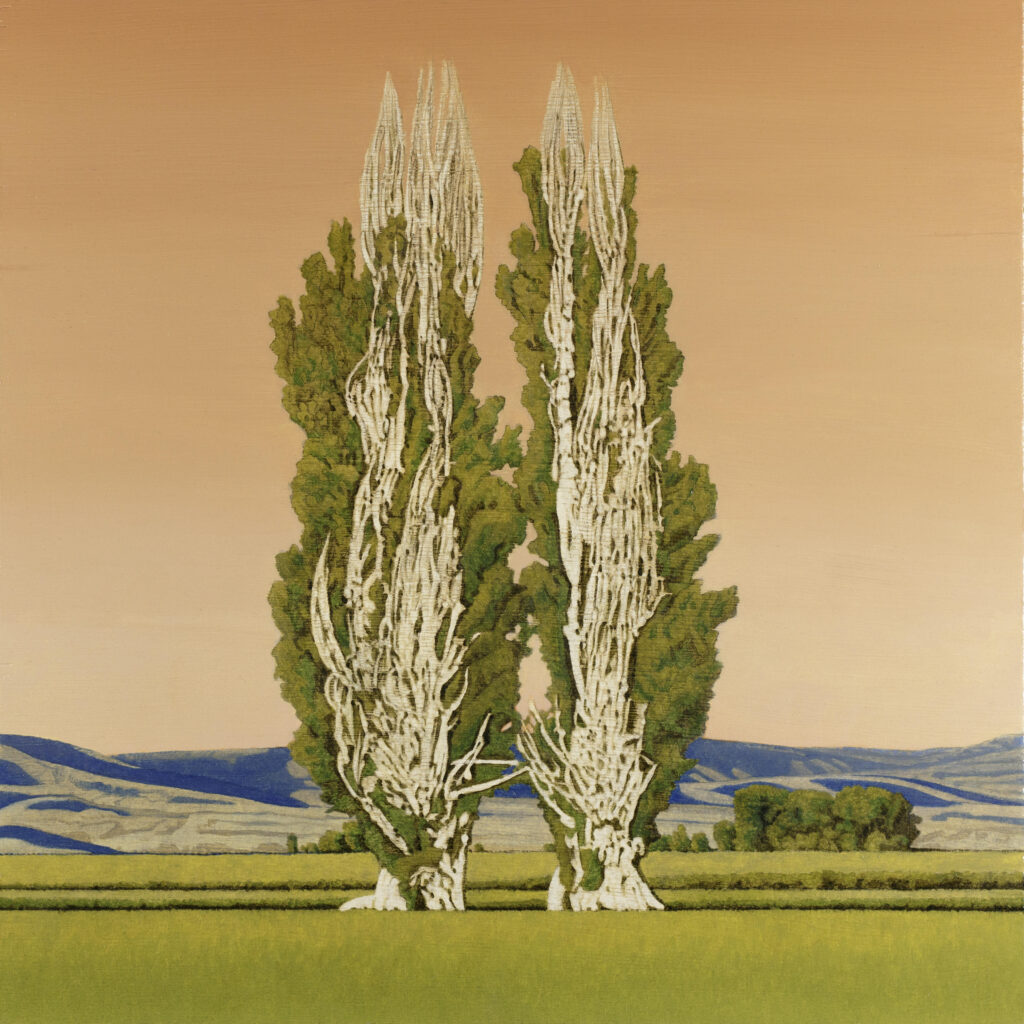
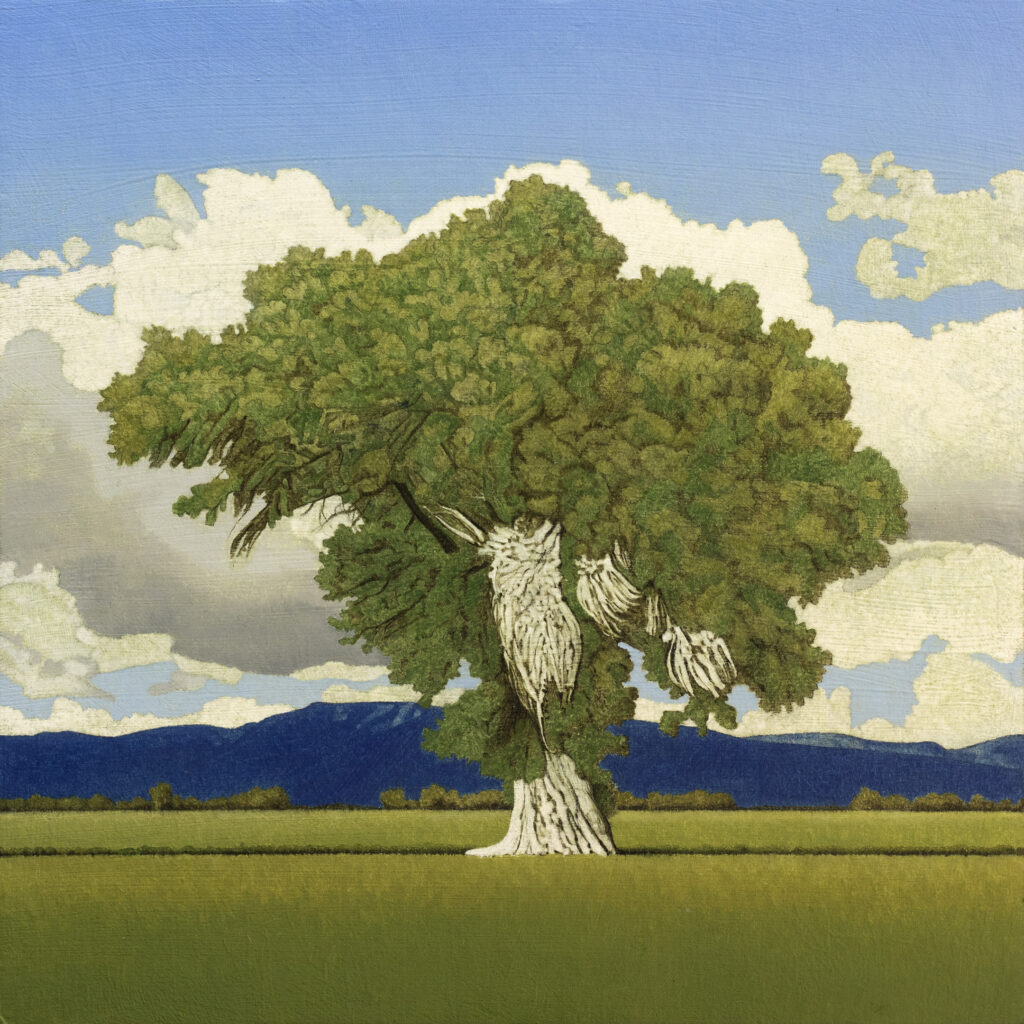
It’s the light hitting it. You have this quality of light that’s actually glowing off it. Sometimes, taken out of context, you might ask, “Does the tree really look like that?” But that’s part of the dynamic quality of it. You’re pushing and pulling these things, and the eye is seeing it, or the spirit is seeing it.

